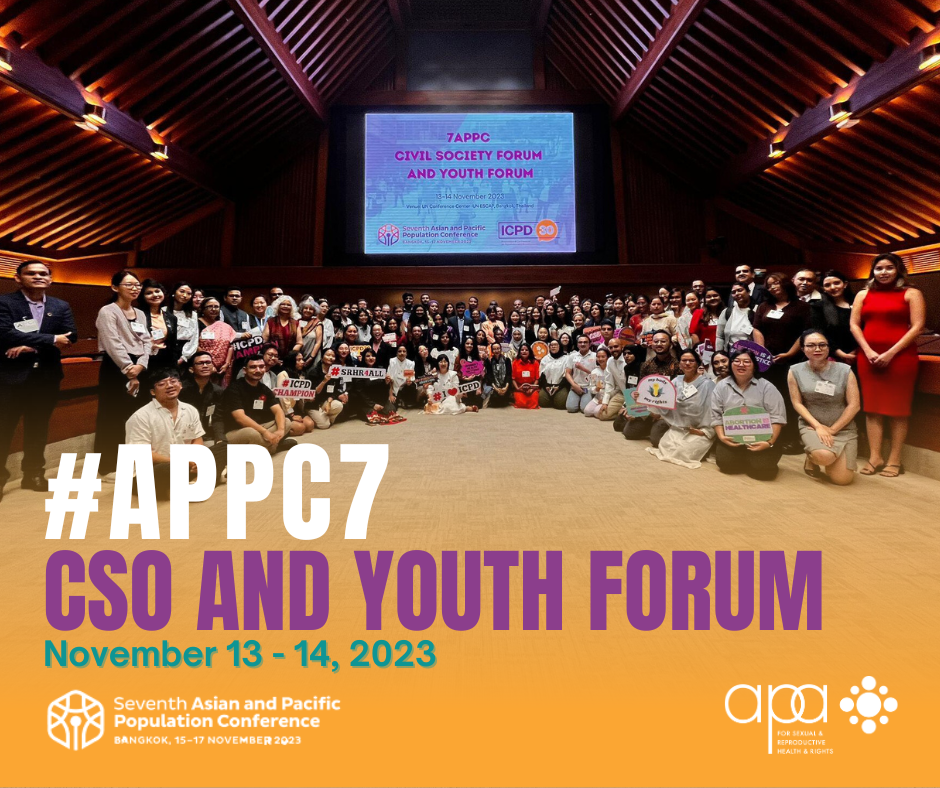
APA was co-chair of the CSO Steering Committee for the 7th Asian and Pacific Population Conference (7APPC) which took place on 15-17 November 2023, with a preparatory CSO and Youth Forum on 13-14 November, at UN ESCAP in Bangkok, Thailand.
The CSO Joint Statement was an outcome of the CSO Forum, and an exerpt was delivered at the Opening Session of the 7APPC and during other agenda items at the intergovernmental meeting.
Civil society and different youth lead and youth serving organisations from 25 countries in Asia and the Pacific convened a CSO and Youth Forum in Bangkok, Thailand on November 13-14, 2023 prior to the Seventh Asian and Pacific Population Conference (7APPC). The aim of the forum was to discuss the progress at national, subregional and regional levels, gaps and challenges towards implementing the Asian and Pacific Ministerial Declaration on Population and Development (APMD) as well as the Programme of Action (PoA) of the International Conference on Population and Development (ICPD) in Asia and the Pacific.
Ahead of the 7APPC, members of women’s organisations, youth organisations, organisations working on climate issues, disability rights, lesbian, gay, bisexual, transgender, intersex, queer+ (LGBTIQ+) rights, indigenous peoples’ rights, migrants’ rights, refugees’ rights, and other stakeholders working on sustainable development, human rights, women and girls living with HIV/AIDS, gender equality, climate action, ageing and longevity, family planning, and sexual and reproductive health and rights (SRHR). CSO and Youth Forum delegates discussed key regional priority action areas with a focus on SRHR, education, gender equality and women’s empowerment, children, adolescents and young people, ageing and longevity, population and sustainable development, data and statistics, international and labor migration, climate change and the implementation of the ICPD Programme of Action (PoA), 30 years since its inception in 1994.
The CSO and Youth Forum brings forth our collective demands and concerns with regards to the progress on gender equality and sexual and reproductive rights and well-being in the Asia and the Pacific region. The Call to Action captures key recommendations discussed by participants in the forum.
Through this Call to Action, we present our recommendations and call upon all our governments, UN agencies, donors, and other relevant stakeholders, to address the issues faced by those in the region in our collective strides to be intersectional, sustainable and inclusive for all.
BACKGROUND AND CONTEXT SETTING
Looking back on the population and sustainable development agenda in the Asia and the Pacific region, it has been 75 years since the Universal Declaration on Human Rights, 60 years since the first Asian Population Conference (APPC), it is the 30 year review of the implementation of the International Conference on Population and Development (ICPD) Programme of Action, 10 years since the adoption of the 2013 Asian and Pacific Ministerial Declaration on Population and Development, and the half-way mark to achieving the 2030 Agenda for Sustainable Development in Asia and the Pacific.
Our region is at a critical juncture. The Asia Pacific is the most populated region on Earth, with 60%of the world’s population living in the region. What happens here matters at the global level, particularly when it comes to gender equality and SRHR. People in the Asia Pacific region in all their diversity, including those experiencing conflict, disasters and humanitarian settings, and those in geographically remote areas, should be able to access SRHR information and services without stigma, discrimination, violence, with gender equality and human rights in just societies.
However, the region was not able to adapt to the pressures of COVID-19, climate disasters, forced migration and displacement, and instead regressive and discriminatory laws were established, and authoritarian regimes were installed that have had a debilitating impact on our efforts to address inequalities, achieve gender equality, provide accessible and affordable SRHR for all, ensure quality education, enable freedom of speech and media, provide clean water, sanitation, housing, adequate and quality long-term care and social contact for all sectors including older people, amongst others. The rise of anti-rights actors and opposition to SRHR and bodily autonomy has also led to a weakening of human rights norms and accountability in the region.
While recognising the substantial progress made since the adoption of the ICPD Platform for Action, such progress has not been universal and there is still far to go in realising human rights for all. Sexual and reproductive health is a life saving, essential part of health care and crucial to achieving sustainable development. Throughout the region, women, girls, indigenous peoples, persons with disability, LGBTIQ+ persons, older people, women and girls living with HIV, migrants, people living with HIV, people living in humanitarian crisis due to conflict and climate-induced disasters, migrants and refugees, sex workers and others marginalised groups continue to experience inequalities, inadequacies in and unequal access to quality, safe, affordable, and responsive sexual and reproductive health services.
People experiencing multiple and intersecting forms of discrimination and violence continue to experience poorer SRH outcomes throughout the region. Cervical cancer is one of the most preventable cancers but many countries in the region continue to have high incidence and mortality rates due to inadequate access to vaccination, screening and treatment and information. Women living with HIV (WLHIV) frequently experience gender-based violence, denial of services, intimate partner violence and forced abortion.
Over half of all estimated unsafe abortions worldwide occur in Asia, and mostly poor and rural women in the region are forced to seek unsafe abortions due to a plethora of factors. Asia and the Pacific is the second most restrictive region in the world for contraceptive and abortion access and services, with a quarter of governments restricting access on the basis of age or marital status, or requiring parental consent. Even where abortion is broadly legal, people needing abortions, particularly the poor, young, and geographically isolated, continue to face significant barriers to accessing safe procedures such as provider refusal, geographical distance to health facilities, and a lack of awareness regarding abortion and post-abortion laws, coupled with prevailing stigma and fear, among others. In the advent of robust and updated frameworks on safe abortions such as the 2022 WHO Abortion Care Guidelines, it is not enough that countries liberalize abortion laws, but also to adopt the latest evidence in practice and build enabling environments for access.
Though most countries in South Asia have made steady progress in reducing their adolescent pregnancy rate, it remains stagnant in many countries in East Asia, Southeast Asia, and in the Pacific. Most countries in the region have laws and policies regarding young people’s SRH or comprehensive sexuality education, and many have included some components of sexuality education in their school curricula, however implementation is frequently limited in scope and/or insufficient. Older people’s reproductive health after the age of 49 has been nearly totally neglected.
Digital transformation of services and information, especially the digital transformation of health remains a challenge in the region in the context of gender digital divide. Disparities in access to digital technology are not only gendered, but also defined by rural and urban divides. Nearly 40 per cent of the population in the Asia Pacific remained unconnected in 2021, with non-users disproportionately concentrated in rural and remote communities and within the female population. Digital transformation presents enormous potential for public health service delivery, including SRHR telemedicine, and online digital sexuality education, while upholding protection of personal data and right to privacy. Digitalisation must be pursued with human rights at the center, with ongoing consideration of the impact of rapidly-evolving technologies that can perpetuate existing patterns of inequality.
Sexual and gender-based violence among young people in the region still remains high with 50% of youth aged 15-24 in the Pacific experiencing physical and sexual intimate partner violence. In the region, South Asia has the highest level of violent death among adolescent girls – almost twice the global rate. Harmful practices also continue to affect the health and lives of women and girls. Women living with HIV are particularly vulnerable to gender-based violence. This comes in the form of physical, sexual, psychological, mental, verbal and economic abuse. Intimate partner violence is a serious issue in our region because it is overlooked due to existing culture in the society. This region has the highest rate of child marriage in the world, with almost half (45%) of women aged 20-24 reporting that they were married before the age of 18. Female genital cutting/mutilation (FGM/C), forced and coerced to sterilization are also practiced in a number of Asian countries across the continent.
Furthermore, older women account for 53% of Asia Pacific’s older persons over the age of 60, rising to 60% over the age of 80. With their longer life expectancy at birth, that share increases with age. This points to the fact that older women generally outnumber older men in Asia and the Pacific. The region is moving from a youthful population to a population structure that has an increased share of older persons and we are witnessing the longevity trend. These demographic shifts have implications for health, health care technologies, employment, social protection, income security, quality of life, lifelong learning and long-term care of individuals including during climate, humanitarian and disaster responses. It also challenges the nature and understanding of intergenerational relationships, since older age groups now exist in almost equal proportions to younger or middle-aged age groups, especially in better developed countries, suggesting that new intergenerational dialogues and compacts will have to be created as a country develops, and as the population ages and fertility falls.
Migration within, into, and out of the Asia Pacific is diverse as the region is host to major countries of origin, countries of destination, and transit countries for migrants. The region is the source of the world’s 115 million migrants and destination for 62 million migrants. Yet the exploitation and oppression of migrants remain unaddressed in population and development discourse. Primarily, the rampant forced migration in Asia Pacific persists due to abject poverty and lack of decent work with livable wages, militarisation, political repression, conflict and war, and climate crises. Migrants' health rights are also being ignored across the migration continuum. Furthermore, the aforementioned demographic shifts also directly impact women, especially women migrant workers. The rising aging and aged population increases the regional demand in care and domestic work from women migrant workers. Migrants’ vulnerability exposed and exacerbated by the COVID pandemic has not been adequately resolved post-pandemic as there is observed general erosion of rights, especially for migrant and women migrant workers. Modern-day slavery, poverty wages, gross labor and human rights violations, and little to no access to health, especially HIV/AIDS and SRHR services and information, as well as protection for gender-based violence remain rampant. The criminalization of migrant workers based on HIV-positive status and other health conditions persists and must end.
Asia Pacific hosted 6.8 million refugees and 1.2 million stateless peoples in 2022. Many of them have been forced out of their land and country due to conflict, religious fundamentalism, and war. Many lack access to employment, health and services. Health services and clinics in refugee camps are lacking while health services, especially SRHR services, remain expensive and inaccessible especially for women and girl refugees and asylum seekers. Sexual exploitation, forced marriages and sex, child and labor trafficking among asylum seekers and refugees persist.
Migrants and refugees unfortunately do not figure in the population census, especially in migrant-destination countries. As proven by COVID, they were the first to bear the brunt of the pandemic, were left behind or forgotten in government aid and services, and in worse situations, were inhumanely treated. They are treated as second-class citizens or alien residents excluded by many migrant-destination governments.
Climate change and SRHR are inextricably linked. The region bears the brunt of the rapidly escalating climate crisis that has led to more frequent and harsh climate emergencies and yet comprehensive SRHR services are largely missing in climate related discourses, programmes and implementations at all levels. Studies showed that the policy landscape on gender, climate change and disaster risk reduction is diverse and quite focused on the top-down approach of driving gender-responsive action.
Human rights organisations and activists globally confront the challenge of diminishing civic spaces and a rise in anti-rights, anti-gender rhetoric, posing a threat to the advancement of human rights, bodily autonomy, and justice. These factions wield influence through extensive disinformation campaigns, narrative control, limitations on movement, rise in online gender based violence (GBV), and restrictions on humanitarian responses. In recent years, the region has seen the rise of conservative and authoritarian governments directly impacting the work, wellbeing, and life of human rights defenders. This is especially the case for women human rights defenders (WHRDs), who face fundamentalist opposition forces and are targeted in governments’ abuse of the law and law enforcement mechanisms to advance anti-rights and anti-gender agendas. In the face of climate crises, conflict and armed tensions, and anti-rights propaganda, the vitality of human rights defenders cannot be understated. They bridge access to life-saving health care and humanitarian services. Yet instead of empowerment, protection, and support, they face harassment, threats on life, and incarceration. From 2019 to 2021 alone, WHRDs are the second-most targeted group of defenders, with over 400 cases recorded across 21 Asian countries. Worse, the numbers remain conservative as many cases are not reported and documented.
In National Policy frameworks, key gender-specific issues such as sexual and reproductive health and rights, disability and gender-based violence get skipped very easily from planning processes and often have to be traded- off with competing priorities. If we are to make sustainable and meaningful progress towards these goals, it can only be realised by ensuring the voices of those marginalised and most vulnerable are not only heard, but also included within the highest levels of decision-making.
Governments must commit to universal access to health care and SRHR, especially the commitments made at International Conference on Population and Development and the Agenda 2030 for Sustainable Development to provide comprehensive SRH services, to strengthen systems at the national level and regularly track the implementation of ICPD commitments alongside SDGs, treaty bodies, and other relevant mechanisms and platforms. This includes increasing investments in healthcare and specifically for SRH resources.
We call on Asia and the Pacific member states, multilateral organisations, and donors to:
Poverty eradication and employment
Eradicate poverty and its root causes by providing enabling environments, ensuring access to productive employment and decent work for all, and guaranteeing social integration and protection for all. Particular consideration is required for women, older people including older women, LGBTIQ+ people , migrant workers, sex workers, and all those engaged in the informal sector as well as those in paid and unpaid care work.
Affirm the Sustainable Development Goals (1 and 8) ensure equitable employment opportunities and eradicate poverty in all its forms and dimensions so that all human beings can fulfill their potential by addressing time poverty, which disproportionately affects women who perform unpaid care work at home. These should be enacted through investments in care infrastructure and universal basic income, and the development of policies towards establishing positive, supportive and flexible work environments that allow people of all genders to equitably balance work and home responsibilities.
Establish progressive and equitable national tax systems that create fiscal space to support diversification of sustainable and local economic activities, as well as the expansion of social protection and services and increased investments in education and health.
Health including sexual and reproductive health and rights
Ensure meaningful participation and universal access to SRHR services for all people in their diversity, including but not limited to diversity of age, background, sexual orientation, gender identity or expression, sex characteristics, disability, marital status, geography, ethnicity, humanitarian crisis, refugee status, HIV status, living in prison, etc. Ensure access to contraceptives and SRHR information and services in an inclusive, non-judgemental and a rights based approach empowering informed decisions.
Decriminalise abortion, take steps to address norms and taboos that restrict women and girls’ access, make safe abortion services and menstrual regulation with medication (MRM) easily accessible to all, irrespective of age and marital status, and train grass-roots health workers to facilitate access by liaising with health- care centers as well as community outreach, and supervising protocols for MRM. Governments must amend the laws and policies that restrict the right to safe abortion and expose pregnant persons to discrimination and restrict their rights to bodily autonomy, not only for the individuals who access the services but also the health provider. Ample resources must also be made available to provide accessible, high-quality, stigma-free contraception and safe abortion services for diverse individuals, enabling them to live with dignity.
Greater attention to people-centered laws and policies, including decriminalizing adolescent sexuality, ensuring health professionals and gatekeepers are sensitized and don’t obstruct adolescents’ and youth choice and access, and upholding their agency at individual level to make informed sexual and reproductive decisions throughout the lifecycle.
Make a people-centered safe, comprehensive, quality SRHR information and services accessible through the health system, community outreach, and selfcare.
Increase access and utilization of quality and respectful health services by trans and gender diverse people through provision of gender-affirming care, including hormones; health workers education and training for the provision of gender-inclusive care; provision of health care for trans and gender diverse people who suffered interpersonal violence based in their needs; health policies that support gender-inclusive care, and recognition of self-determined gender identity.
Ensure youth-adult partnership for meaningful and inclusive youth participation to be the active actors (from the design, development to monitoring and evaluation phase) in the adolescents and youth health issues, as well as involving the enabling environment (parents, teachers, religious leaders, etc) to meaningfully advance the SRHR-related issues and creating safe space for their mental and physical well-being.
Ensure that appropriate health, social and long-term care support is available, affordable and accessible to all people, including all marginalized groups that include but not limited to indigenous peoples, older people, people with disability, people living with HIV, LGBTIQ+ people, people living in humanitarian crisis due to conflict and climate-induced disasters, migrants and refugees, sex workers, young people and women in all their diversities. Informal caring, often provided by women and girls, as part of many long-term care networks, should be acknowledged and remedial policies to support such carers should be part of all national policies.
Education including Comprehensive Sexuality Education (CSE)
Ensure educational environments that are free from GBV against women and girls, including safe transportation to and from schools. Investigate, prosecute and enact adequate punishments for all cases of harassment and GBV in educational institutions.
Ensure universal access to high quality, age and developmentally appropriate and evidence based CSE, supported by laws and policies, allocation of resources and strategies for implementation and monitoring for effective delivery in schools and out-of-school settings in local language(s) aligning with global standards.
Ensure CSE in times of multiple crises that includes, poverty settings, natural and human induced disasters, political, economic,and other humanitarian crises.
Incorporate digital and online literacy and safety in school and university curricula for adolescent and youth in local languages aligning with global standards.
Implement CSE at all levels of formal and non-formal educational settings including engagement and capacity building of educators, parents and healthcare providers.
Ensure the provision of current and accurate content and is inclusive of principles on human rights, bodily autonomy, gender equality, consent, safe abortion, and pleasure. Ensure curricula respect evolving capacities and right to self-determination with respect to diverse cultural traditions through CSE.
Design and provide inclusive, CSE content and curricula that specifically caters to the different needs of different population groups prioritizing addressing the needs of marginalized groups like people with disability, LGBTIQ+ people, indigenous people, migrants and children of migrants, young people out of school and in rural settings and other groups at risk of poor SRHR outcomes.
Strengthen monitoring and evaluation,and availability of disaggregated, timely and context specific data in relevant policies and programmes through cross-sectoral coordination to ensure consistent and effective implementation of CSE programs prioritising active engagement of young people of all diversity in the process.
Strengthen partnerships of national and local government, CSO, private sectors, international organizations, academia, the development organizations, women, youth, adolescents, and people with disability, marginalized communities, indigenous people, LGBTIQ+ people, older people, migrants, refugees, sex workers, people who inject/used drugs and other relevant stakeholders in CSE implementation.
Gender equality and empowerment
Tackle all forms of gender- based violence and all forms of sexual-based violence impacting all diverse genders by:
- Establishing and implementing transformative policy and legislation underpinned by data and evidence
- Gender-responsive resource allocation and investment in on the ground action
- Increasing knowledge and awareness to address harmful social norms, including toxic masculinity, that enable gender-based and sexual violence
- Establishing a national response mechanism that is survivor-centric and trauma-informed
Governments must end human rights violations and harmful practices such as gender-based violence and sexual violence, FGM/C, forced surgeries on intersex persons and children, menstrual isolation, forced abortion, including child, early and forced marriages and unions, contraceptive measures (both permanent and temporary) forced onto all people including persons with disabilities, those in institutions and in confinement for being in conflict with the law by investing in transformative legal and policy level changes and ensuring effective implementation as well as increasing knowledge and awareness in order to transform attitudes, stereotypes, and social norms that enable human rights violations Repeal discriminatory laws, policies, and practices that prevent individuals from their right to express their identity, and accessing all services, information, education, employment, and participation in public and private life on the basis of gender, migration status, area of work, health status, socioeconomic status, disability, age, class, caste, sexual orientation, gender identity and expression, sex characteristics, etc.
Ensure action and investment in capacity building and empowerment for girls, women and all LGBTIQ+ people through an intersectional and intergenerational approach that is co-designed and owned by the communities
Adequately recognise and support all forms of work, including informal work such as unpaid care and sex work.
Implement gender mainstreaming across all government legislation, policies and practices including gender-responsive budgeting
Adolescents and young people
Enable and empower youth in decision-making spaces to uphold human rights and actively engage in the decision-making process by establishing adolescents and youth advisory boards or councils at various levels of government and organizations to ensure the representation of youth voices in policy discussions inclusive of people from diverse backgrounds and representation beyond demographic. Develop training programs that educate young people about their rights and responsibilities, fostering a generation that is well-informed and empowered. Encourage mentorship programs where experienced leaders guide and support young individuals entering decision-making roles. Streamline conversations across CSOs and Youth working groups on conversations and platforms rather than siloing efforts
Enact robust legislation to ensure high standards of healthcare for youth, including comprehensive support for HIV, AIDS, mental health, non-communicable diseases and more. Advocate for laws that specifically address the healthcare needs of adolescents and young people, ensuring access to SRHR regardless of whether they have subdued to child marriage or not. Establish youth-led and community-based healthcare centers that specifically cater to the needs of youth, offering confidential and non-judgmental services, especially for adolescents and young people who have indulged in risky behaviour and substance abuse.
Promote inclusive family planning and establish a volunteer peer leader mechanism to enhance support for such initiatives. Implement awareness campaigns to break down cultural barriers and stigma related to family planning, emphasizing inclusivity and diversity from the younger generation by developing peer-led educational programs that provide accurate information on family planning methods, sexual health, and reproductive rights. Create mentorship programs where experienced individuals guide and support young leaders advocating for inclusive family planning policies.
Ensure facilities and services are disabled-friendly future-proof and climate-resilient, with a focus on youth-led and community service efforts. Integrate sustainable practices into healthcare and educational facilities, demonstrating a commitment to environmental responsibility. Support youth-led initiatives focused on climate resilience and environmental conservation, tying these efforts to broader health and education programs. Encourage the development of technologies that promote sustainability and resilience in infrastructure, aligning with the priorities of the youth.
Emphasize the principles of UNSCR2250: Youth, Peace and Security agenda namely participation, protection, prevention, partnership, and reintegration as key principles to safeguard youth and children in advancing the ICPD agenda. Implement measures to protect young individuals from discrimination, violence, and exploitation, creating safe spaces for their physical and mental well-being. Focus on preventive measures to address challenges before they escalate. Foster partnerships between governments, NGOs, and youth-led organizations to collectively address the diverse needs of young people. Develop reintegration programs and supportive ecosystems for youth who may have faced challenges, providing them with support to reintegrate into society successfully.
Create adolescent and youth-friendly pathways, incorporating technology to address population issues within the community. Design digital platforms and apps that provide information and resources on sexual health, family planning, and other relevant topics.
Incorporate technology into educational curricula, ensuring that young people are equipped with digital literacy skills for the evolving job market. Foster innovation hubs and programs that encourage young entrepreneurs to develop solutions addressing population challenges using technology.
Reinforce the need for intergenerational and resilient education to prepare adolescents for transitional phases. Develop educational programs that bridge generational gaps, promoting understanding and collaboration between different age groups. Integrate life skills education into school curricula to prepare adolescents for the challenges of adulthood. Establish mentorship programs that connect young individuals with experienced professionals, providing guidance and support during transitional phases. Emphasize the importance of resilience and adaptability in education, preparing young people for a rapidly changing world.
Ageing
We recommend policies and strategies to take a rights-based, intersectional and whole of life cycle approach to reduce disadvantages for all people living in ageing or aged societies. For governments to implement policies to enable ageing and aged populations to choose to work or choose not to work and to have policies and strategies in place to harvest the longevity dividend of the ageing population.
Ensure appropriate social security nets and infrastructure to support healthy ageing and to reduce the unpaid care work burden especially on women over family care.
Older people, especially women and the LGBTIQ+ community, are often disadvantaged in terms of employment, financial security, property rights, and social inclusion. Social protection systems, alongside broader reforms to educational systems to enable life-long learning will be critical. The development of integrated person-centred approaches to health, social and long-term care that delivers quality of life with dignity, will be crucial to a society that can add meaningful life to years. These activities should cover primary, secondary and tertiary preventative activities for health and well-being.
Remove age discriminatory policies for older workers and focus on subpopulations of these people with disability, who are migrant workers, or those who belong to LGBTIQ+ communities, and other structurally excluded communities as well.
Environmental reforms that create both age-friendly and inter-generational communities, and that address climate challenges will also be needed.
There must be provision of integrated and comprehensive care and services to older people including their sexual and reproductive health and rights including older people with disability. There should also be state supported quality long term care suitable for all older people without discrimination and which addresses their medical, physical, mental, and social needs in a positive way, covering issues such as menopause care, gender based violence, frailty, and social and economic security.
Longevity societies arising as a result of population ageing and lower fertility should be seen as opportunities to build new societies instead of being seen as undermining the current structures of society; this includes non-discrimination against older persons from work and descent communities.
International migration
Through bi-lateral agreements and increased transparency, governments uphold and promote international human rights and decent work standards for labor migrants (both internal and transnational), and promote non-discriminatory and inclusive access to SRHR education and services through increased adoption of universal health care (UHC), as well as access to employment opportunities and pathways to citizenship, particularly for women, elderly, youth, persons with disabilities, and LGBTIQ+ migrants.
Formulate laws and mechanisms especially in migrant-destination countries that will uphold and protect the rights and freedoms of all migrants, asylum seekers and refugees, including climate refugees, ensure their access to health, especially SRHR, and services regardless of their status and situation, and create an environment free of racism, xenophobia and discrimination.
Address the root causes of forced migration and displacement by raising awareness, creating decent jobs with living wages back in migrants’ home countries, justly and peacefully resolving political conflict, and resolving systemic barriers. Promote sustainable, comprehensive, and non-discriminatory reintegration programs with a rights-based approach.
Value migrants and refugees for their rights and wellbeing, not only for their economic contribution to society. Ensure the active and meaningful participation of migrants and refugees and advocates in the review, implementation and monitoring of the progress of the ICPD, the Global Compact for Safe, Orderly and Regular Migration, and ILO standards and conventions on migrant workers, while addressing challenges such as language and digital divide.
Ensure that the returnee migrants have systems in place to facilitate re-inclusion and reintegration through holistic social and economic programs.
Women Human Rights Defenders and Activists
Stop the criminalisation and attacks on women human rights defenders, including those working on population, gender, sexuality, CSE and SRHR issues.
Ensure access to free, quality legal aid services and legal protection for women working in conflict zones and addressing issues related to structural war crimes and crimes against humanity targeting women.
Investigate and prosecute all acts of harassment, GBV, and intimidation and reprisals against women human rights defenders. Respect, protect and fulfill human rights, as well as ensure they and their family members can enjoy freedom of association, expression and movement in order to carry out their legitimate work.
Address and eradicate all technology-facilitated violence against human rights defenders and activists of social justice movements including online harassment and social media disinformation campaigns, among many other forms.
Establish a robust, fair, and just reporting, documentation, and monitoring mechanism for cases of harassment, GBV, intimidation, and reprisals against WHRDs and activists. Amend and remove legal regulations that may increase the risks of safety of activists and human rights defenders.
Population and sustainable development
As Asia Pacific grapples with the intricate interplay of population dynamics and sustainable development, it is imperative to adopt a comprehensive and collaborative approach. The key strategies to guide policies and initiatives in the pursuit of a sustainable future must include prioritising investments in education and healthcare including SRHR, economic development, to empower and enhance human capital to transform cultural and demographic challenges.
Develop, implement and strengthen policies that promote gender equality. Empowerment of women in all diversity through access to education, healthcare, social protection, economic, civic and political participation, opportunities not only contributes to sustainable development but also positively influences population dynamics.
Ensure universal access to sexual and reproductive health including family planning information and services for all.
Plan and build infrastructure that is accessible, affordable, environmentally friendly, sustainable, socially inclusive, and climate and disaster resilient.
Address youth unemployment by creating an enabling environment through the provision of quality education, skills development, enterprise development and frame policies that ensure a smooth transition to decent and livable wages.
Embed climate-resilient practices in development initiatives. Given the vulnerability of the Asian and Pacific region to climate change, integrating sustainability into policies, infrastructure projects, and resource management is essential for long-term resilience.
Encourage businesses and consumers to adopt sustainable practices that reduce environmental impact and promote the efficient use of resources.
Implement inclusive rural development initiatives to address the urban-rural divide. Supporting rural areas with infrastructure, healthcare, educational opportunities and social safety nets can mitigate rapid urbanisation and contribute to balanced development.
Promote inclusive policies that ensure equitable access to resources, including land, water, and energy. Addressing resource inequality is crucial for preventing conflict and fostering sustainable development.
Encourage collaboration among countries in the region to share best practices, research findings, and innovative solutions.
Establish robust monitoring and evaluation mechanisms in close collaboration/consultation with civil society including young people for policies development and implementation related to population and sustainable development to regularly assess in identification of successes, challenges, and areas for improvement, enabling evidence-based policy amendments.
Create an enabling environment to actively and meaningful Engage civil society as equal partner, non-governmental organisations, and diverse stakeholders in the policymaking process. Inclusive decision-making ensures that policies reflect the needs and aspirations of the population and fosters a sense of shared responsibility.
Data and statistics
Mandate the disaggregation of population and development data by key demographic variables, such as age, gender, ethnicity, and socioeconomic status, to ensure a more nuanced understanding of the population and its diverse needs, to measure the progress on the 2030 Agenda, and the monitoring of the ICPD Programme of Action.
Strengthen CSOs’ and youth organizations full collaboration, participation, and accountability in the design and execution of data collection processes to ensure the inclusion of their perspectives and lived experiences from an intergenerational and intersectional approach.
Implement open data policies to increase transparency and accessibility of population and development data while ensuring data privacy and involving cutting-edge technologies like Artificial Intelligence/Machine Learning (AI/ML). Develop user-friendly platforms and accessibility for persons with disabilities and interfaces that allow policymakers, researchers, and the public to easily access, analyze, and visualize data, fostering a culture of data-driven decision-making.
Encourage the adoption of standardized methodologies for Monitoring, Reporting, and Verification (MRV) across the region. Promote the use of adaptive methodologies that can flexibly address diverse regional contexts and emerging trends.
Establish a robust monitoring and evaluation system to track gender equality initiatives across communities to track impacts. Recognize CSO-generated evidence that uncovers and brings attention while making actions to the lived experiences of marginalized and overlooked communities and individuals across the region and make it part of national-level data and evidence gathering to address the multiple and intersecting forms of discrimination and harmful practices, including child marriage and FGM/C through legal and policy level measures and coordinated multi-sectoral approaches.
Establish ethical guidelines and standards for disaggregated data reporting to ensure and maintain consistency and comparability across different regions and sectors.
Establish youth-led data initiatives and campaigns to encourage young people and older people to contribute to and engage with data collection and voluntary national review processes, promoting a sense of ownership and empowerment.
Allocate resources for long-term, longitudinal studies to track demographic trends, population dynamics, and development indicators over time. Support collaborative research efforts between governments, academia, and civil society to undertake comprehensive longitudinal studies that provide valuable insights for evidence-based policymaking.
Foster sub-regional, regional and international collaboration in data collection and analysis to address cross-border challenges, effects and impacts and shared development goals.
Prioritize forecast analysis highlighting the need for robust forecast analysis to anticipate demographic trends and challenges. Encourage the integration of demographic forecasting into national and regional development plans to inform policy decisions.
Development and implement standardized frameworks for collecting, analyzing, and disseminating data on AI regulations across the sub-regional, regional and international level.
Encourage children, youth, women, and people with diverse gender identity and expression in the field of STEM and AI, education and careers, to create local and gender centric solutions for ICPD and SRHR.
Governments must include qualitative data as part of national data, ensure state budget for regular national data collection on SRHR and facilitate and use data generated by CSOs.
Population dynamics, sustainable development and climate change and crises
Invest in building climate resilient health systems that will support and ensure SRH services in times of crisis or disaster. Governments and humanitarian actors to ensure the integration of comprehensive sexual and reproductive health and rights services including safe abortion and emergency contraception into health system strengthening in humanitarian settings.
Invest in research, data collection, and evidence building to understand the extent and nature of impact of climate change related disasters on women’s SRHR. Support and use research done by CSO and local groups.
Ensure that national policies, programming and budget related to climate change and disaster risk reduction incorporate gender mainstreaming and SRHR and include gender and age-differentiated impact analysis of climate change disasters and gender equality.
Provide capacity strengthening and development to local governments and stakeholders regarding emergency preparation, policy formulation, and prioritising of marginalised people of intersecting identities in response, and incorporating SRHR commodities in emergency. Embrace local and indigenous community knowledge, culture and practices in climate change adaptation and response plans and strategies.
Regional Cooperation, accountability and modes of implementation
Allow multi-stakeholder partnerships and collaboration, including cause- or issue-specific alliances. Ensure meaningful and effective participation of CSOs being part of decision making at all levels, sub national, national, regional, and global. Ensure that CSO recommendations be made part of the UN reports/documents, if not accommodated by national governments. Finally, allow ⅓ of funding be allocated for CSO and youth participation in processes.
Establish a platform for government and CSO members to ensure south-south collaboration and learning exchange across the region on both the Asia-Pacific Ministerial Declaration and the Moana Declaration and to prioritise south-based knowledge-sharing by investing in CSO monitoring of the progress of implementation of regional documents as well as building the evidence base to determine the situation of marginalised populations in all their diversities such as LGBTIQ+ people, indigenous people, and sex workers, and others experiencing multiple and intersecting forms of discrimination, along APMD priority actions, while calling for language that does not discriminate on all aspects.
Digital transformation
Ensure that digital transformation is community-centered and equitable by enabling policies, infrastructure for universal access that is affordable, safe, user friendly, and relevant especially in the context of older people and those living in remote and rural areas.
Close the digial divide by enhancing efforts to achieve universal and equal access to technology and digital innovation focusing on affordability, safety and respect for the right to privacy. Expand and ensure accessibility of digital learning and literacy infrastructures for all groups disproportionately affected by digital divides, including gender, urban-rural, and age divides.
Hold information and communications technology companies accountable for episodes of online and technology-facilitated gender-based violence and discrimination, compromises and violations on the right to privacy and protection of data, and aggravating digital divides.
Ensure that cyber laws do not infringe upon adolescents, young peoples’, women’s and LGBTIQ+ peoples’ human rights especially sexual and reproductive health and rights.
Ensure that systems, regulations and policies that aim to deliver SRH information, counseling and services through digital means are tailored to local communities’ needs and capacities. Needs assessment studies should be conducted periodically to inform the policy-making and programming processes.
Ensure that the right to privacy, confidentiality and bodily autonomy are upheld in any interventions on health, SRHR, and well-being that use digital technologies ensuring accessibility for persons with disabilities.
- Employ encryption technologies to safeguard data during transmission and storage, and the secure disposal of data
- Encourage the use of innovation and technology in information access ensuring public internet facilities being installed in communities to bridge the digital divide that is impacting community access
Lastly, we would like to strengthen democratic spaces and civic participation by strengthening CSO voices in the human rights accountability mechanisms in Asia and the Pacific region. International human rights accountability mechanisms offer a unique outlet to have dialogue with duty bearers and hold them accountable if and when they fail to uphold the human rights commitments. We note with concern the rise of anti-rights actors and opposition of SRHR and attacks on civic spaces in the Asia Pacific region is also a result of decline in and weakening of human rights accountability mechanisms, which can be addressed through strengthening of human rights accountability processes and tools. Additionally, we appeal to governments to remove fiscal regulations that restrict access to funding for human rights, women’s rights, children and migrant worker rights feminist organisations and organisations expanding access to SRHR.