People with diverse SOGIESC often experience socioeconomic inequalities fundamentally driven by social stigma and institutionalised discrimination related to their SOGIESC status. Consensual same-sex sexual relations among adults remain illegal in around half of Australia’s development program’s priority countries, including seven Pacific Island nations. Across Asia and the Pacific, there are few countries with SOGIESC anti-discrimination protections, a lack of prohibition of nonconsensual medical interventions on intersex people, restrictions on the ability to update gender markers in identity documentation such as passports and birth certificates, and criminalisation of cross-dressing and sex work. Despite these challenges, the potential for change is clear, including through international partners. Many countries in the region are making progress through locally led advocacy and partnership between civil society and government and while international partners have supported this progress, Asia and the Pacific still receive some of the world’s lowest levels of funding for SOGIESC civil society
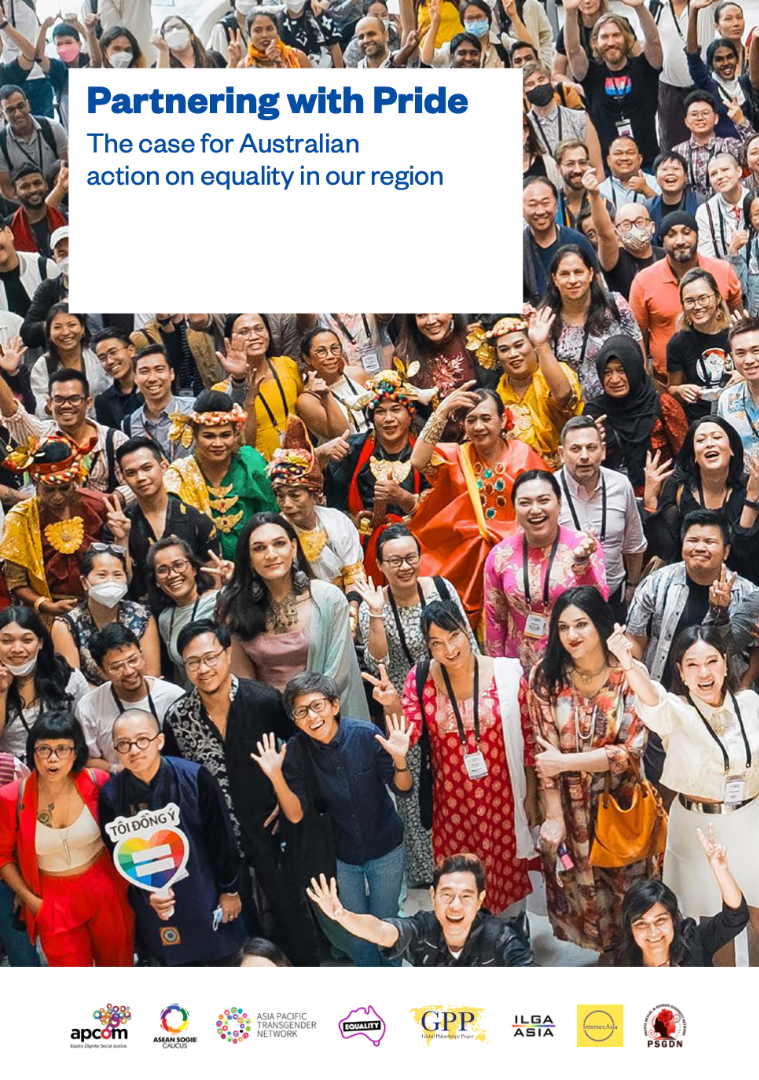
This report makes the case for Australia to step up as a leader in the inclusion of people with diverse sexual orientations, gender identities and sex characteristics (SOGIESC) in its foreign policy and development cooperation. The Australian Government has a unique opportunity to show leadership in Asia and the Pacific to advance LGBTIQ+ rights. The report recommends that Australia:
- Establish targeted funding of $15million per year for LGBTIQ+ community groups in the region to help prevent legal and social stigma and discrimination
- Develop a strategy to guide its approach on LGBTIQ+ issues in Asia and the Pacific
- Appoint a high-level role to represent Australia internationally and lead engagement on LGBTIQ+ rights.