
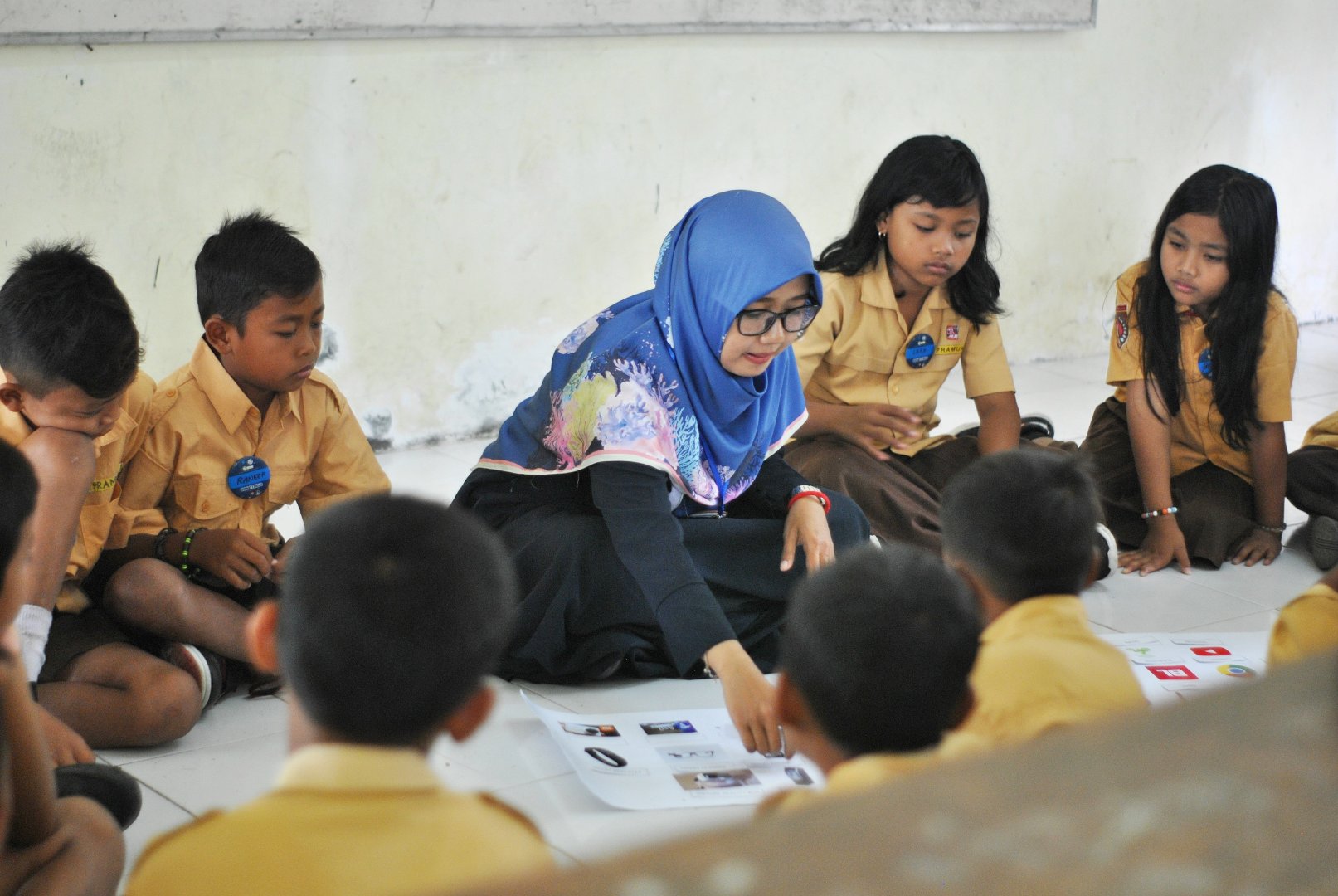
In Indonesia, a sex-positive approach is absent from conversations about sexuality. Comprehensive sexuality education (CSE) is disconnected from the realities of sexuality, because
- Sexual and reproductive health education given in schools places emphasis solely biological aspects;
- Sexuality is still considered a taboo subject in schools;
- Education tends to stress the dangers and risks of pre-marital sex from a moralistic and religious point of view;
- Education does not address the importance of gender relations and the rights aspect in young peoples’ sexual and reproductive health [1], let alone sex as a right.
The taboo surrounding discourse on sexuality impacts the effectiveness of programs being delivered to young people. Evidence further shows that neglecting sexual well-being in counselling can have a negative impact on safe sex practices[2].
ARI examined and compared how ‘sex-positive’ the CSE related education and messaging was across three different organisations in Pati District, Central Java Province, Indonesia.
- ARI Central Java. A youth-led organization that reaches rural youth in Pati and undertakes capacity building on SRHR.
- IPPNU and IPNU. A female student council (IPPNU) and a male student council (IPNU) under the Nahdlatul Ulama (NU), a faith-based organisation. IPPNU and IPNU have an SRHR education program called PIK R (Youth Information and Counseling Center) in Pati.
- GENRE. A programme for 16-22 year olds under the National Family Planning Coordinating Board (BKKBN), a government entity. GENRE works on preventing child marriage, drug use, and ‘free sex’ and trains young ambassadors on these topics.
ARI undertook a two-pronged analysis by
- examining the documents and curricula used by the 3 organisations and analysing content against a set of pre-determined parameters on sex-positivity and pleasure; and
- conducting qualitative interviews with 10 young people (aged 15-24) who had received capacity building on sexuality from the 3 organisations.
The 10 interviewees were chosen through random sampling (male and female). The content analysis template and interview guide were developed using parameters from the learning objectives in the ITGSE (2018) and the ‘Pleasuremeter’ developed by GAB.
Key Findings
The 3 organisations use different terminology for sexual activity, which can have different connotations for young people. For example, ARI uses the term ‘risky sex’ to mean sexual activity that may result in STIs or unintended pregnancies; IPPNU and GENRE use the term ‘free sex’ or pre-marital sex, which refers to any sexual activity undertaken outside / before marriage. This means that young people aren’t necessarily receiving a message of what constitutes ‘safe sex’ (i.e. penetrative sex with condoms or non-penetrative sexual activities).
A gap was revealed between the organisational positions on sexuality as stated in documents and at the national level, and what trained young people believe or practice at local level. This is exemplified in several ways:
- IPPNU is against child marriage, yet respondents revealed that they when they support girls who have an unplanned pregnancy, they encourage them to get married (thereby perpetuating child marriage).
- GENRE has discussions on diversity at the national level, however, according to interviewees members at the local level still do not feel comfortable revealing diverse sexual orientation.
- ARI supports sexual diversity, but some interviewees felt that ‘LGBT people should not be supported’.
- IPNU supports gender equality, however according to interviewees when they speak about SRHR, there is a belief in traditional values such as ‘wives are meant to serve their husbands’.
- GENRE has training modules for young people on SRHR developed by the national family planning ministry, however no training has been provided at the local level. As a result, the young people have self-taught from the modules, but not had an opportunity for value clarification
Generally, all of the organisations had positive values on safety where each of them considered the ability of individuals to protect themselves from risks of violence or infection important, including STIs and HIV prevention as well as unwanted pregnancies. Their view on individual body autonomy made them collectively oppose child marriage, violence against women and children, and sexual violence. On the other hand, the researchers found a few negative values represented in regard to the body where sexual pleasure is considered as something that can only be experienced by married people.
Recommendations
- To organisations that already support sex positivity: ensure monitoring and mentoring of staff and organisation members on the values of sex positivity. The process needs to ensure that individuals can unpack their own values and be open to existing realities;
- Support organisations to develop sex positivity values by cultural organisation interventions.
- Because of the limitations in the current research: there needs to be further cross-sector studies on how sex positivity values are implemented on SRHR issues beyond youth-led NGOs and how it can be made sustainable.
[1] Pakasi, Diana Teresa, & Reni Kartikawati. (2013). Antara Kebutuhan dan Tabu: Pendidikan Seksualitas dan Kesehatan Reproduksi bagi Remaja di SMA. Pusat Kajian Gender dan Seksualitas, Fakultas Ilmu Sosial dan Ilmu Politik, Universitas Indonesia. Makara Seri Kesehatan, 2013, 17(2): 79-87 DOI: 10.7454/msk.v17i2.xxxx
[2] Higgins JA, Hirsch JS. The pleasure deficit: revisiting the “Sexuality Connection” in reproductive health. Perspect Sex Reprod Health. 2007;39(4):240–247.