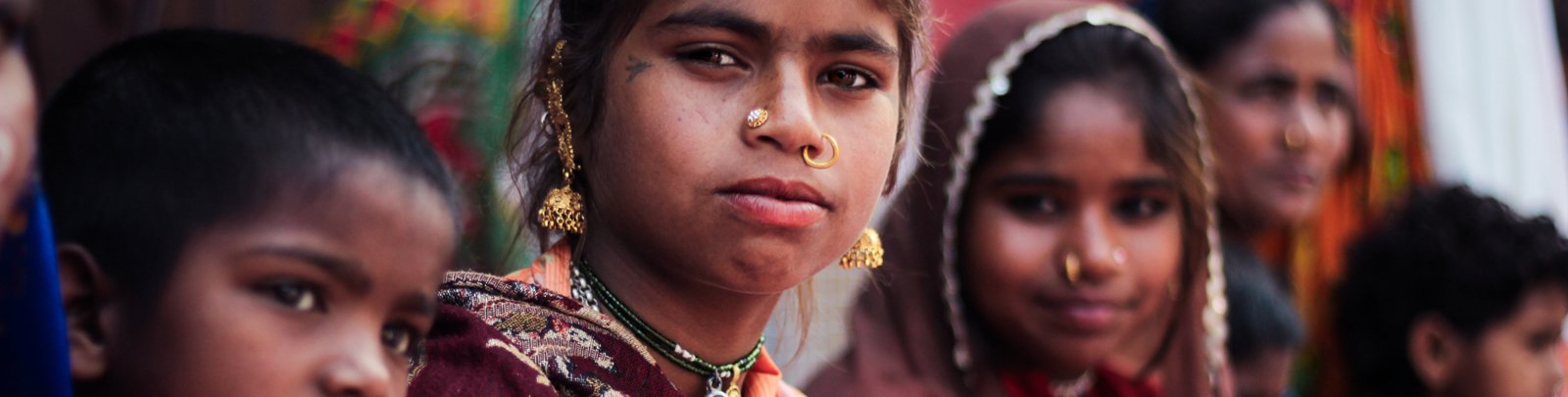



These briefs are intended for organizations and activists engaged in advocacy on SRHR, gender and sexuality in Asia and the Pacific. They aim to provide a snapshot of how SRHR links to the new Agenda 2030 framework laid out by the 2019 Global Sustainable Development Report (GSDR) and the 6 entry-points it identifies, provide brief evidence from the context of Asia Pacific, and illustrate how fulfillment of SRHR helps countries in the region achieve just and sustainable development using the development justice framework of Asia Pacific Regional Civil Society Engagement Mechanism (AP RCEM). The briefs have been developed by members of the AP RCEM Thematic Working Group (TWG) on Gender, Sexuality and SRHR, and supported by the co-coordinator of the TWG., APA.
INTERLINKAGES BETWEEN GENDER, SRHR AND ENTRYPOINT 1
Human well-being and capability prerequires and derives from the fulfilment of many fundamental human rights and across Agenda 2030, including amongst others: poverty eradication (SDG1), food and nourishment (SDG2) and good health with longevity (SDG 3); access to education and lifelong learning (SDG 4); gender equality and equal treatment (SDG 5); access to clean water and basic sanitation (SDG 6), clean energy (SDG 7) and decent livelihood (SDG 8); sustainable life on land (SDG 15); and the attainment of peace, justice, institutional development (SDG 16).
In 2018, almost half of the 1.3 billion multidimensionally poor people globally lived in the Asia-Pacific (AP) region. Despite reductions in extreme poverty, multidimensional poverty remains concentrated among marginalized groups including women, indigenous peoples, ethnic/caste/racial minorities, coastal communities and highlanders, migrant workers, landless farmers, and persons with disabilities. Gender inequality, patriarchy, religious fundamentalism and increasing militarism further limit the opportunities, available services and capabilities of nearly half of the world’s population where women, girls and lesbian, gay, bisexual, transgender, intersex, queer, asexual, plus (LGBTIQA+) people face multiple levels of marginalization and constant threat of discrimination and/or violence.
Inequality in access to sexual and reproductive health and rights (SRHR) services, education and information frequently translates in inequalities of income, education, employment opportunities and overall health and well-being.[1] In many Asia Pacific countries, women and girls lack information, are subjected to reproductive coercion, harmful cultural norms and traditions such as child and forced marriage, female genital mutilation, gender-based violence and discrimination, low access to SRHR services including safe abortion and provider incompetence, bias[2] or conscientious objection. While some countries in the region offer constitutional protection, by and large discrimination and lack of protection for LGBTIQA+ communities is also widely prevalent. Collectively, these precipitate human rights violations of bodily autonomy for women and girls and marginalized groups.
POLICY COHERENCE
The centrality of SRHR to sustainable development is highlighted in the 1994 International Conference on Population and Development (ICPD) Programme of Action (PoA), 1995 Beijing Platform for Action (BPfA), 2015 Sustainable Development Goals (SDGs) or Agenda 2030, and their review and outcome documents; in particular the 2013 Asia Pacific Ministerial Declaration on Population and Development. More recently, the Nairobi Statement on ICPD +25: Accelerating the Promise emphasizes health as ‘a precondition for and an outcome and indicator of the social, economic and environmental dimensions of sustainable development’, and aims to achieve three zeros by 2030 – ending preventable maternal mortality, unmet need for contraceptives, and gender-based violence and harmful practices. It recommends acceleration in 5 critical areas to achieve health and well-being for all, including: gender equality, youth leadership, political and community leadership, innovation and data, and partnerships.
In 2019, the UN adopted the Political Declaration of the High-level Meeting on Universal Health Coverage (UHC), which reiterates the goal to universalize access to SRH care and services, including for family planning, information and education, and the integration of reproductive health into national strategies and programs.[3] Primary healthcare as the cornerstone of equitable and inclusive health systems is also supported by the 1978 Declaration of Alma-Ata and 2018 Declaration of Astana.[4]
EVIDENCE FROM ASIA PACIFIC
Asia-Pacific is home to more than 60% of the world’s population, and transformation in human well-being and capabilities is crucial for harnessing the region’s abundant human potential.[5] But increasing conflict, disasters and militarization, reduced spending on and privatization of public goods such as health, education services and social protection and increasing patriarchy and fundamentalisms across the region in recent years have only propelled it further behind. In this region:
- Developing countries are spending only 2% of GDP on health (compared to global average of 4.7%) The average share of out-of-pocket spending on health has increased from 47.1% to 48.2% in low and lower-middle income countries[6] since 2010; it declined in high- and upper-middle income countries to 21.4% and 25.6%.
- Only a few developing countries like Bhutan, China, Georgia, Maldives, Sri Lanka and Thailand, have universal health care (UHC) systems.[7] Over 40% people have no access to health care.
- Despite physical, mental, social, political and economic persecution, LGBTIQA+-affirming and inclusive mental health services are largely inaccessible and stigmatized for LGBTIQA+ minorities, women and girls.[8]
- Same sex sexual acts are illegal in 27 countries (2019). And where it’s not illegal, there are no protective laws for LGBTIQA+.[9] And in some countries non-adherence to strict gendered dress codes results in penalties in schools and colleges for the non-binary and LGBTIQA+ community.[10]
- Approximately 1.6 billion people lack access to basic sanitation, and 260 million lack access to clean water at home.[11] Unsafe drinking water and poor sanitation contribute to people living with HIV becoming more susceptible to opportunistic infections including diarrhea, and lack of safe sanitation facilities for women and girls also increases vulnerability to violence (see Entry Point 5).
- An estimated 132 million women still have an unmet need for contraception[12]. In the Pacific, the contraceptive prevalence rate (CPR) for any method in Samoa and Solomon Islands has declined steadily and is staggeringly low at 16.7% (2014) and 21.3% (2015), respectively. CPR for modern methods has also declined in tandem, and in some parts of the Pacific regular stockouts of contraception limit women’s choices and they are often only able to access contraception through temporary international aid programs[13].
- Maternal mortality was more than 4 times higher in lower-middle and low-income countries than in upper-middle income countries, and more than 10 times higher than in high-income countries (2015).[14] In the Pacific, MMR varies significantly across countries, being as high as 215 per 100,000 live births in Papua New Guinea.
- The divide in access to skilled birth attendance (SBA) between the rich and the poor within countries remains high, with Armenia, Kazakhstan and Uzbekistan the only exceptions to extend SBA irrespective of women’s wealth quintile.[15]
- 53.8 million unintended pregnancies occur each year in Asia, of which nearly 65% end in abortion.[16] In Oceania 4,000 unintended pregnancies occur each year, with 38% ending in abortion. In countries where women lack access to safe abortion there is accompanying lack of access to contraceptives. Abortion is not permitted for any reason in only two countries, Laos and the Philippines.
- Adolescent fertility rates remains high. One in seven girls has given birth by age 18, often a result of child marriage and high unmet need for contraception.[17] Available data shows that AFRs continues to rise across the Pacific region exponentially, with the exception of Tuvalu and Kiribati.
- As many as 63% of pregnancies among girls 15-19 years of age in the region are unintended, leading to underreported burden of unsafe abortions. And girls’ inability to manage their menstrual health compromises their ability to complete their education and navigate other aspects of their lives.[18]
- In 31 countries between 4 - 46% of ever-partnered women and girls aged 15 years and older have experienced physical and/or sexual violence between 2000-2019.[19] In 2018, as much as 68% of women in Pacific Islands Countries reported having experienced gender-based violence.[20]
- Most countries do not have comprehensive sexuality education guidance and access to youth friendly SRH services in a single law/policy[21] despite the fact that it promotes better health, reduces violence and chances of unintended pregnancies, corrects power imbalances, prevents STI transmission, and delays sexual debut amongst youth.
- 225 million Dalits in South and South West Asia are routinely denied access to basic services due to caste and descent-based discrimination – about 80% of whom live on less than $1.90 a day. Women are frequent targets of forced conversions, sexual violence and forced marriages, and suffer abject poverty and exclusion.
Underlying these inequities, pervasive patriarchy, evaporating public policies and funds, identity and age -based exclusions in services and data gaps continue to keep marginalized communities behind. Citizen-led health and well-being data is limited, and official data is available for only 71 out of 232 SDG indicators in the region. In the Pacific, data is more scattered, in absence of regular and comprehensive demographic surveys.
CONCLUSIONS
Although some countries have moved towards UHC to improve human well-being and capabilities, none have acquired it fully. Provide adequate financial, human and infrastructural resources towards implementing quality health and education, and ensure well-being; progressively increase investment in quality education, healthcare and social protection, and ensuring transparency and accountability. Access to health, SRHR and education including CSE must be strengthened to ensure they are of the highest standard, free from discrimination and accessible and available to all including adolescents and young people irrespective of their marital status or SOGIESC.
Ensure opportunities for women’s participation in all levels of decision-making structures to realize and fulfil women’s human rights, and gender equality. Discriminatory law and policies must be reviewed and repealed, especially those that criminalize consensual same sex, access to abortion services, or age of consent laws. Raise awareness and work closely with communities to effectively end harmful traditional practices against young people, women and girls and ensure that their health, SRHR and individual rights are protected.
Countries must generate better data to inform policies which ensure that gender-related indicators are included country-level response systems and that robust data disaggregated by sex, age and (dis)ability are routinely collected. Rigorous, quality civil society data collection and reporting should be encouraged, and civil society reports be made widely available in a timely manner along with government reports.
written by: Sarah Zaman
ENDNOTES:
[1] ESCAP (2019). Inequality of Opportunity in Asia and the Pacific Women’s Sexual and Reproductive Health.
[2] UNFPA (2011). Socio-cultural influences on the sexual and reproductive health of migrant women – A review of literature in Vietnam.
[3] Para 68.
[4] Paras. 68 and 69 of the Political Declaration of the High-level Meeting on Universal Health Coverage, adopted by UN member states on 23 September 2019. A/RES/74/2.
[6] OECD/WHO (2018), Health at a Glance: Asia/Pacific 2018: Measuring Progress towards Universal Health Coverage.
[7] ESCAP (2020). COVID Report.
[8] Galen Centre. (2019). What It Means to Suffer in Silence Challenges to Mental Health Access Among LGBT People.
[9] International Lesbian, Gay, Bisexual, Trans and Intersex Association: Lucas Ramon Mendos, State-Sponsored Homophobia 2019 (Geneva; ILGA, March 2019.
[10] UNDP, MSDHS (May 2018). Legal Gender Recognition in Thailand: A Legal and Policy Review.
[11] ESCAP (2020). COVID Report.
[12] Ibid.
[13] Family Planning NSW. Sexual and Reproductive Health and Rights and the Sustainable Development Goals: Priorities for Australia and the
Pacific 2020. Ashfield, Sydney: FPNSW; 2020
[14] OECD/WHO (2018), Health at a Glance: Asia-Pacific 2018- Measuring Progress towards Universal Health Coverage.
[15] ESCAP, 2017. Sustainable Social Development in Asia and the Pacific: Towards a people-centered transformation.
[16] Guttmacher Institute (2018). Abortion in Asia: Fact sheet.
[17] UNFPA/UNESCO/WHO (2015). Sexual and reproductive health of young people in Asia and the Pacific: A Review of Issues, Policies and Programs.
[18] Matthew C. Freeman, Leslie E. Greene, Robert Dreibelbis, Shadi Saboori, Richard Muga, Babette Brumback, and Richard Rheingans. "Assessing the Impact of a School-based Water Treatment, Hygiene and Sanitation Programme on Pupil Absence in Nyanza Province, Kenya: A Cluster-randomized Trial." Tropical Medicine and International Health, 2011. doi:10.1111/j.13653156.2011.02927.
[19] United Nations (2019) Global Sustainable Development Report.
[20] UNFPA (2018). Women who experience intimate partner violence, 2000-2018.
[21] ARROW (2018). Comprehensive Sexuality Education in Asia: A Regional Brief.