“Now I understand the language. I can go back to my country and can better advocate with the government to commit to legislation that will protect and respect SRHR, and help my community,” expressed Sara Thapa Magar, from International Community of Women Living with HIV Asia Pacific. At the beginning of the CEDAW-SDGs Learning Exchange, she shared that one of the barriers is the lack of knowledge on the right language. “There are too many international mechanisms. I don’t know what to use, how to use them, and if using them will make a difference.”
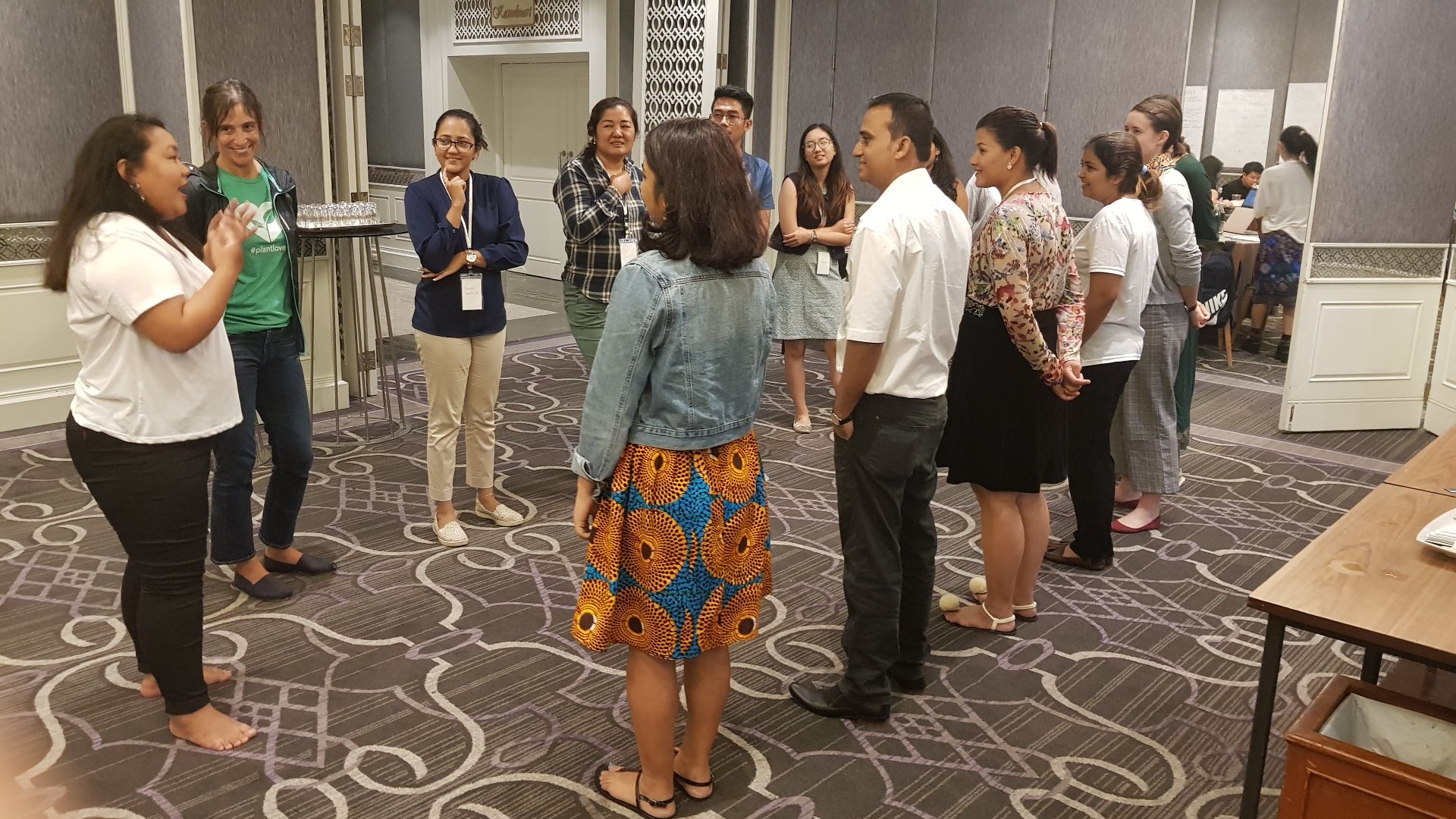
Sara is one of the 20 participants from seven countries across Asia-Pacific who joined the CEDAW-SDGs Learning Exchange last September 7 to 9 in Bangkok. The three-day peer learning activity was organised by Asia Pacific Alliance for Sexual and Reproductive Health and Rights (APA) for members of our network, and in collaboration with the International Women’s Rights Action Watch Asia Pacific (IWRAW AP) and Realizing Sexual and Reproductive Justice (RESURJ). It aimed at strengthening Sexual and Reproductive Health and Rights (SRHR) advocacy front-liners’ understanding of state legal obligations concerning SRHR under the international human rights system, and their capacity to make links between different policy and legal frameworks, with emphasis on CEDAW.
Responding to a Need
Countries in the Asia-Pacific region are party to international conventions that promote and protect human rights. However, lack of political will and widespread conservatism has led to clamping down on rights, and especially sexual and reproductive rights, in many countries. While information on international processes and frameworks are available online, many SRHR advocates lack in-depth knowledge and confidence in using these tools to engage with their national governments. ‘How do we localize CEDAW and other international processes?’ was a resounding question.
“This meeting was organized to facilitate peer learning exercises through guiding conversations on the significance of international legal and policy frameworks concerning SRHR, including CEDAW, Sustainable Development Goals (SDGs), International Conference on Population and Development (ICPD) and Beijing Platform for Action (BPfA),” explained APA Executive Director Alexa Johns. “By helping participants identify the links between these international processes, particularly CEDAW to the SDGs s, they will be able to understand and strategize how to use CEDAW in propelling their SRHR advocacy forward.”
The process also encouraged the participants to delve into the structural causes behind the injustices faced by many communities in their work to address sexual and reproductive health violations, and how that injustice is compounded both by gender and belonging to a marginalized community.
After analyzing CEDAW, SDGs, the Beijing Platform of Action, and the International Conference on Population and Development, participants were able to point out important elements that were missing on each frameworks and were able to understand which framework is a better tool for advocacy. More importantly, participants were able to identify provisions in CEDAW that they can use to push for SRHR legislation in response to the policy gaps in their own countries.
Strengthening the Alliance
The peer learning activity ensured not only learning but also relationship-building, with participants from different organizations and constituencies connecting to address critical gap areas and challenges together. The learnings from the training will be used to develop a training module on linking CEDAW with the SDGs and other frameworks for the fulfillment of SRHR, for collaborative use by organizations in Asia Pacific and other regions.