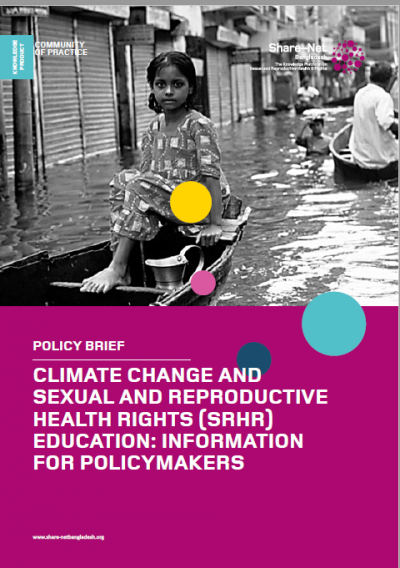
The risk of climate change disasters and their impact on local people is increasingly determined by health, economic, and security inequalities. These inequalities are gendered and intersectional-specific. Despite expanding research on the economic, social, and health effects of climate change on women, only two governments (Liberia and Peru) have special legislation addressing the nexus of climate change and gender. In terms of sexual and reproductive health care, rights, and services, none of the 190 INDCs examined by the WGC included the right to access sexual and reproductive health services in the aftermath of climate change and climate change-related catastrophes.
Inadequate access to SRHR services increases women’s risk of physical, mental, and psychological harm; it also impacts their ability to build capacity and resilience to climate change. Providing people with knowledge about climate change and how it relates to their health is part of empowering and equipping them to be active in the response that climate change requires. This policy brief helps the policymakers explain climate change and how it links to gender and sexual and reproductive health and rights